A friend of mine, when she was a hotel manager, used to train her customer facing staff by producing a basket of shoes and invite them to imagine how the wearers of the shoes would want to be dealt with by the hotel; she would get them to make up stories and imagine the context of their visit.
I like this approach very much as it captures a number of key attributes both of customer service and the journey mapping exercises that I run with many organisations as part of optimising their customers’ experience.
Maybe I should take a selection of shoes with me to my journey mapping workshops - as well as enough stationery to run a small office!
I’m very fond of the Kirsty MacColl song that provides this post’s title. To say that it dwells on the importance of choosing suitable footwear for strenuous activities would be doing it very poor service and yet that is the essence of it (listen to it here - a delicious mix of witty and naughty).
I like this approach very much as it captures a number of key attributes both of customer service and the journey mapping exercises that I run with many organisations as part of optimising their customers’ experience.
I’m very fond of the Kirsty MacColl song that provides this post’s title. To say that it dwells on the importance of choosing suitable footwear for strenuous activities would be doing it very poor service and yet that is the essence of it (listen to it here - a delicious mix of witty and naughty).
There is a well known quote (of assorted attribution) which runs “before you criticise a man, walk a mile in their shoes” together with the rider “and then you’ll be a mile from them and have their shoes”. However, the main message it is that you need to empathise fully with your subject and understand their situation completely. Again, a really worthwhile part of considering and improving the customer experience.
For me then, shoes epitomise a number of the key differences
that good journey mapping brings when it focuses on the emotional as well as
the functional: inflexible and insensitive customer experience can be like the
wrong shoes (as in our opening song); all very well in their way but not right
for the context.
Perhaps you reckon you've got the right shoes. Well done. But ...
Shoes change and flex; walking any distance in shoes, no matter how good and comfortable when you started, can still cause blisters and then you're really in trouble. Long distance walkers constantly check their shoes, the first sign of a hotspot they stop and sort things out before carrying on. Constant vigilence is therefore key.
Can your customers do that with your journey and the shoes your putting them in?
Perhaps you reckon you've got the right shoes. Well done. But ...
Shoes change and flex; walking any distance in shoes, no matter how good and comfortable when you started, can still cause blisters and then you're really in trouble. Long distance walkers constantly check their shoes, the first sign of a hotspot they stop and sort things out before carrying on. Constant vigilence is therefore key.
Can your customers do that with your journey and the shoes your putting them in?
Some new shoes need to be broken
in, as so it is often with new relationships with companies. We put up with tight new shoes,
as we know (from experience) they typically get more comfortable (and we’ve just also spent our cash). But increasingly we won't put up with this from companies, as we
know the experience with other companies which haven’t required to be broken
in. As for not changing because we’ve spend the cash, well that can be
true, but … what do we do with shoes which after a suitable period refuse to
yield to our foot? We bin or recycle them, and so it is with companies which
fail to provide the right experience, we bin them at the end of the contract.
So ... what sort of journey do you provide to your customers? What sort of shoes are they wearing? What sort of shoes are you providing?
Do you know?
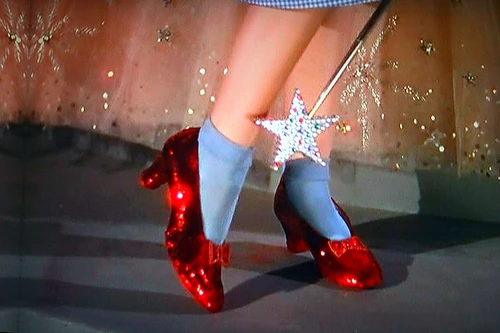
Can they click their heels and be transported just like Dorothy's Ruby Slippers?

No comments:
Post a Comment